Danville, IN Motorization Retrofit
A motor in the headrail you already own, sometimes
A quick summary before the details: this is a made-to-order product, measured in the home and built to your numbers. The answers here explain what that means for pricing, timing and what happens if something fails.
- Service: Motorization Retrofit for Danville homeowners
- Service area: Danville, IN and surrounding areas Two different timelines apply. New custom product takes weeks because it has to be made. Repairs to what's already hanging, a cord lock, a ladder string, a chain that jumped the clutch, are usually far quicker.
- Insured and bonded
- Serving Danville, IN since 2008
Expert Motorization Retrofit for Danville Homes
Retrofit is for the house that already has shades and can't reach them. Danville built 915 units during the 2000s, and a two story foyer window over a half round transom was close to standard through that period, so there's a real population of shades installed fifteen or twenty years ago on windows nobody has touched since. Kensington Venture is the newer version of the same problem: houses built in 2022 already turning over as resales, where the second owner inherits a builder's shade package on a stairwell opening. Adding a motor to what's there beats replacing shades that are perfectly sound.
Not every headrail takes a retrofit motor, and that's the first thing to establish. A retrofit motor either replaces the clutch inside a roller tube or drives an existing lift system from the headrail, and both need specific internal dimensions plus components that are compatible with what you have. Older builder grade blinds usually offer neither. Where it does work, the battery disclosure applies exactly as it does on a new motorized shade: Hunter Douglas states PowerView battery life is about one year, and a retrofit doesn't change that. Installed motorization runs $300 to $1,500 per window nationally, and a retrofit sits below a full replacement.
Signs You Need Motorization Retrofit
If you notice any of these in your Danville home, it is worth booking a measure. None of it is urgent, and none of it fixes itself either.
A renovation opened a wall and power is available now
You want the west shades down before the glare starts
Shades over a stair nobody has raised in a year
The blinds are fine, the tilt is the daily annoyance
Chains hang beside a patio opening in a family room
Somebody promised a kit that doesn't exist
You want the shades you already own to run themselves
Cloth on a high window faded unevenly because half never moves
Somebody drags a drapery panel by hand twice a day
Half the house is motorized and half isn't
How Danville Window Treatments Handles Motorization Retrofit
Every job follows the same five-step process. Transparent, thorough, and done right the first time.
Existing headrails identified by line
Battery interval put in writing
Motors fitted and paired to controls
End cap photographed and dimensions recorded
Manual override kept where offered
Motorization Retrofit in Danville
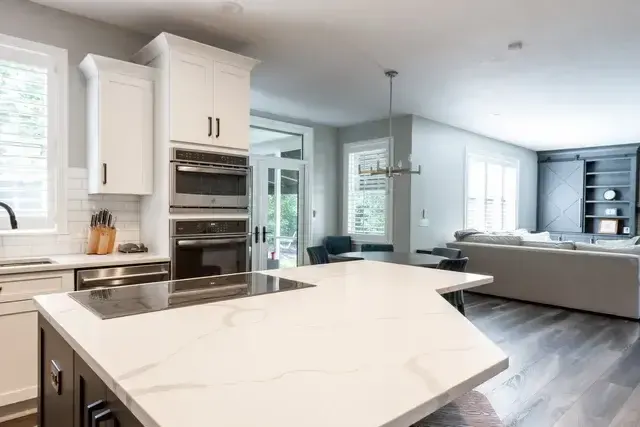
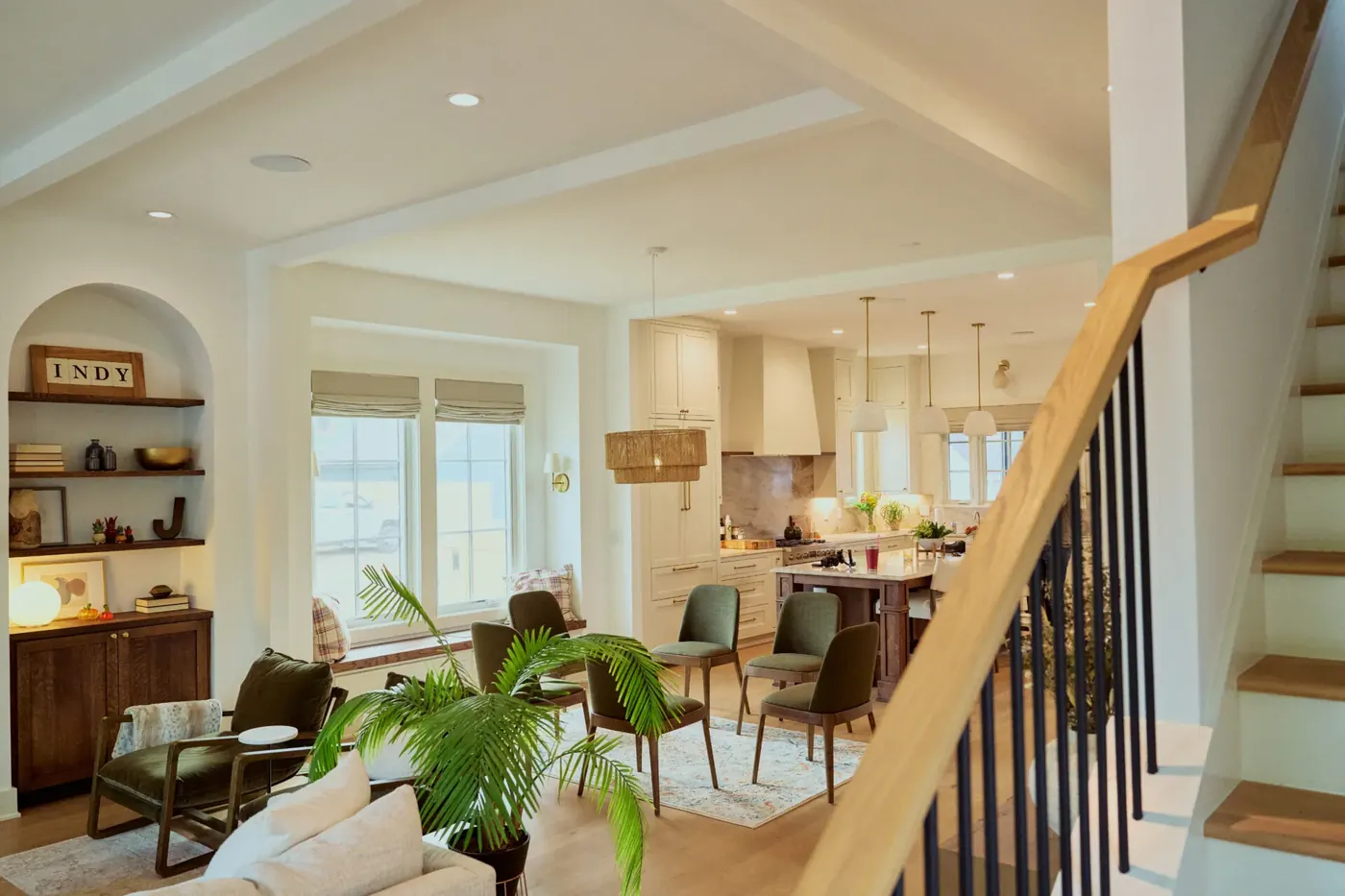
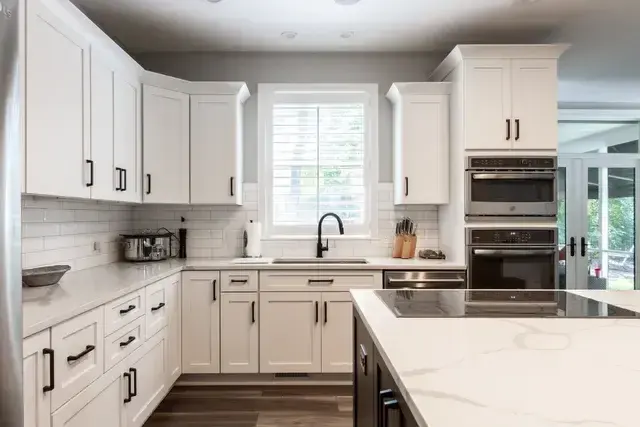
Photographs from real motorization retrofit jobs completed by our crew in Danville and surrounding areas.
What Motorization Retrofit Includes
Every Danville job is documented item by item. Here is what the crew covers.
Every existing headrail identified by manufacturer and product line before any motor is discussed
Retrofit compatibility checked against what the maker actually publishes, since most headrails were never built to take a motor
Roller tube diameter and idler end measured, because on rollers the fabric moving to a motorized tube is often the real path
Existing fabric assessed for age and sun damage, so nobody spends motor money on cloth with two years left in it
Cellular, pleated and woven shades reviewed case by case, as retrofit kits for those are the exception rather than the rule
Vertical tracks and horizontal blind tilt mechanisms treated as separate questions with separate answers
Finished weight and drop compared against the motor's published lift capacity rather than assumed
Power method chosen per opening: a battery wand, a rechargeable pack with trickle charge, or hardwired low voltage
Battery interval disclosed in writing before the order, since Hunter Douglas states PowerView battery life is about one year
Charging access considered on high openings, because a shade you need a ladder to recharge becomes a shade nobody recharges
Radio range checked from the intended control location to the furthest opening before hardware is committed
Repeater placement planned where masonry or distance sits between the control and the shade
Control scheme decided up front: handheld remote, wall keypad, app, or a scene that runs on a schedule
Travel limits set at commissioning and rechecked once the fabric has hung and relaxed
Header power coordinated with a licensed electrical contractor wherever hardwiring is the chosen path
The replace-instead recommendation given plainly where a retrofit would cost more than a new motorized shade
A signed contract covering the motors, the controls and the price before parts are ordered, per IC 24-5-11 above $150
Each retrofitted shade cycled top to bottom twice, with the remote and any keypad tested in the room
What a Motorization Retrofit Costs in Danville
The published national range for motorized window coverings is roughly $300 to $1,500 per window installed, and that figure is for new motorized product. A retrofit is a different animal and it prices per opening after somebody has looked at the headrail, because the answer ranges from a straightforward motor swap to no compatible part existing at all. Read the national number as the ceiling that decides the question: when retrofitting an aging shade approaches the cost of a new motorized one, the new shade is the better buy and we'll say so. Roller shades in Danville retrofit most readily, since the fabric can usually move to a motorized tube. Danville Window Treatments quotes each Hendricks County opening on what it actually needs.
How Motorization Retrofit Differs by Product
Every product in this trade behaves differently in a room. Here is what that means for this work.
Roller tube motor: A tubular motor slides inside the roller tube and drives it directly. This is the most retrofittable product in the category, because if the existing fabric is sound it can often be transferred to a new motorized tube sized to the same brackets.
Manufacturer retrofit kit: Some makers publish a motor designed to drop into their own headrail, and where one exists it's the cleanest path by far. Where one doesn't, a generic motor will not simply fit, because headrail profiles are proprietary and were never designed to host one.
Battery wand motor: A slim battery pack that clips to the headrail or sits inside it. It's the least invasive power method and the reason most retrofits are possible at all in a finished house. The tradeoff is a replacement interval you're agreeing to before you buy.
Rechargeable pack with trickle charge: A rechargeable battery topped up from a small solar panel on the glass or from a plug. It stretches the interval considerably and it doesn't remove it. On a high opening it's often the difference between a workable system and one that gets ignored.
Hardwired low voltage: Power run to the header and no batteries at all. It's the durable answer and the hardest one to add to a finished wall, which is why it belongs in a renovation conversation. The electrical work is done by a licensed electrical contractor.
Tilt-only motors for blinds: On horizontal wood and faux wood blinds, some lines accept a motor that tilts the slats without lifting the blind. It solves the glare problem on a hard elevation at a fraction of the cost, and it leaves the lift exactly as it was.
Vertical track motorization: Motorized traverse on a vertical track, either as a new carrier set or as a replacement track. It's track-specific work, and whether your existing track can be driven is a manufacturer question rather than a general one.
Handheld remotes and wall keypads: The local control that talks straight to the motor. We fit one on every retrofit regardless of whether an app is in the plan, because a shade that only answers to a phone is a shade a guest can't operate.
Signal repeaters for retrofit motors: A powered device that carries the radio further into the house. Battery motors transmit at low power to protect their own life, so they have less margin than a plugged-in device, and a wall of masonry between the remote and the shade is a real obstacle.
Travel limit commissioning: Setting the stored top and bottom positions, then checking them again after the fabric has hung a few weeks and relaxed. Skipping the second pass is why a retrofitted hembar ends up sitting a half inch off the sill and staying there.
Motorization Retrofit FAQ
Questions we hear most often from Danville homeowners considering motorization retrofit.
Motorization Retrofit Across Danville
We measure and install in every one of these Danville neighborhoods. Each has its own page with the build eras, window conditions and mounting notes for that section.
- Motorization Retrofit in Danville Courthouse Square Historic District
- Motorization Retrofit in Danville Main Street Historic District
- Motorization Retrofit in Orchard Estates
- Motorization Retrofit in Northwood Haven
- Motorization Retrofit in Miles Farm
- Motorization Retrofit in Kensington Venture
- Motorization Retrofit in Whisperwood Lakes
- Motorization Retrofit in Four Oaks
- Motorization Retrofit in Quail West
Other Window Treatment Services in Danville
Danville Window Treatments handles the full scope of window treatment work. Explore our other services below.
Schedule Your Free In-Home Measure in Danville
Reach Us Directly
Our team prioritizes scheduled measures and service calls, and books in-home measures during business hours.
Ready to Book Your Measure?
Call us to set up an in-home measure, or to ask about a treatment that has stopped working. We will talk it through on the phone first.