Wood Blinds

Wood Blinds for Danville, IN

Basswood stained to sit beside 1890s Danville trim

Call (317) 854-7158Get Free Quote
Quick Answer

What follows is what we'd tell you in person about this service, including which rooms it belongs in and which ones it doesn't. That second list is shorter but it saves more money.

  • Service: Wood Blinds for Danville homeowners
  • Service area: Danville, IN and surrounding areas
  • We book measures without much delay. What you can't compress is the fabrication window, which runs two to five weeks depending on the product and the finish. Painted shutter finishes sit at the longer end.
  • Insured and bonded
  • Serving Danville, IN since 2008
Wood Blinds Services

Expert Wood Blinds for Danville Homes

Real wood belongs on Danville's oldest stock. The Main Street Historic District carries 37 contributing buildings put up between about 1844 and 1920, with true wood jambs, applied casing and stained trim that a printed grain cannot match. A Foursquare on North Wayne Street runs 16 to 22 openings, a Craftsman bungalow 12 to 18, and an Italianate or Queen Anne 18 to 28 with almost no two alike. Basswood takes a stain that sits beside 1890s woodwork instead of arguing with it. The Harry Underwood House dates to 1914 and the J.W. Morgan House to 1868, so the trim you're matching is genuinely old.

Wood moves, and you should hear that before you buy. Danville's muggy season runs 25 May to 22 September, and a basswood slat over a kitchen sink or in a full bath will eventually cup, warp or lift its stain. Put faux wood in those rooms. Stain lots also shift: order four windows now and two more next year and the second pair can land visibly different, because wood takes color unevenly by nature. Order the whole room at once. And on a house between 106 and 182 years old, the openings are out of square, so a two inch slat can show a wedge of daylight along one stile.

When to Call

Signs You Need Wood Blinds

If you notice any of these in your Danville home, it is worth booking a measure. None of it is urgent, and none of it fixes itself either.

Water spots have dulled the finish along the bottom rail

A high window nobody can reach stays closed all year

The bedroom blind creeps down overnight on its own

Painted blinds look chalky against fresh millwork

One corner of the opening sits visibly lower than the other

You added a room and the stain no longer matches

The valance ends are open and the brackets show

A living room span is wider than a support bracket allows

New trim went in and the blinds no longer match

A study feels unfinished every time you walk in

Our Process

How Danville Window Treatments Handles Wood Blinds

Every job follows the same five-step process. Transparent, thorough, and done right the first time.

1

Diagonal square check

2

Stain sampled against your trim

3

Casing depth checked per window

4

Wand or cord control chosen

5

Old units and packaging hauled off

Real Project Photos

Wood Blinds in Danville

Photographs from real wood blinds jobs completed by our crew in Danville and surrounding areas.
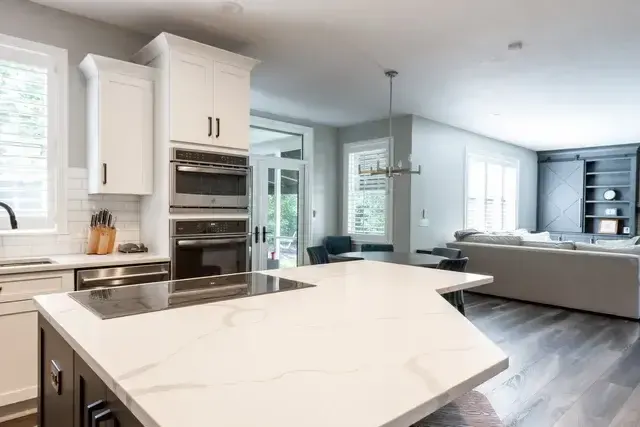
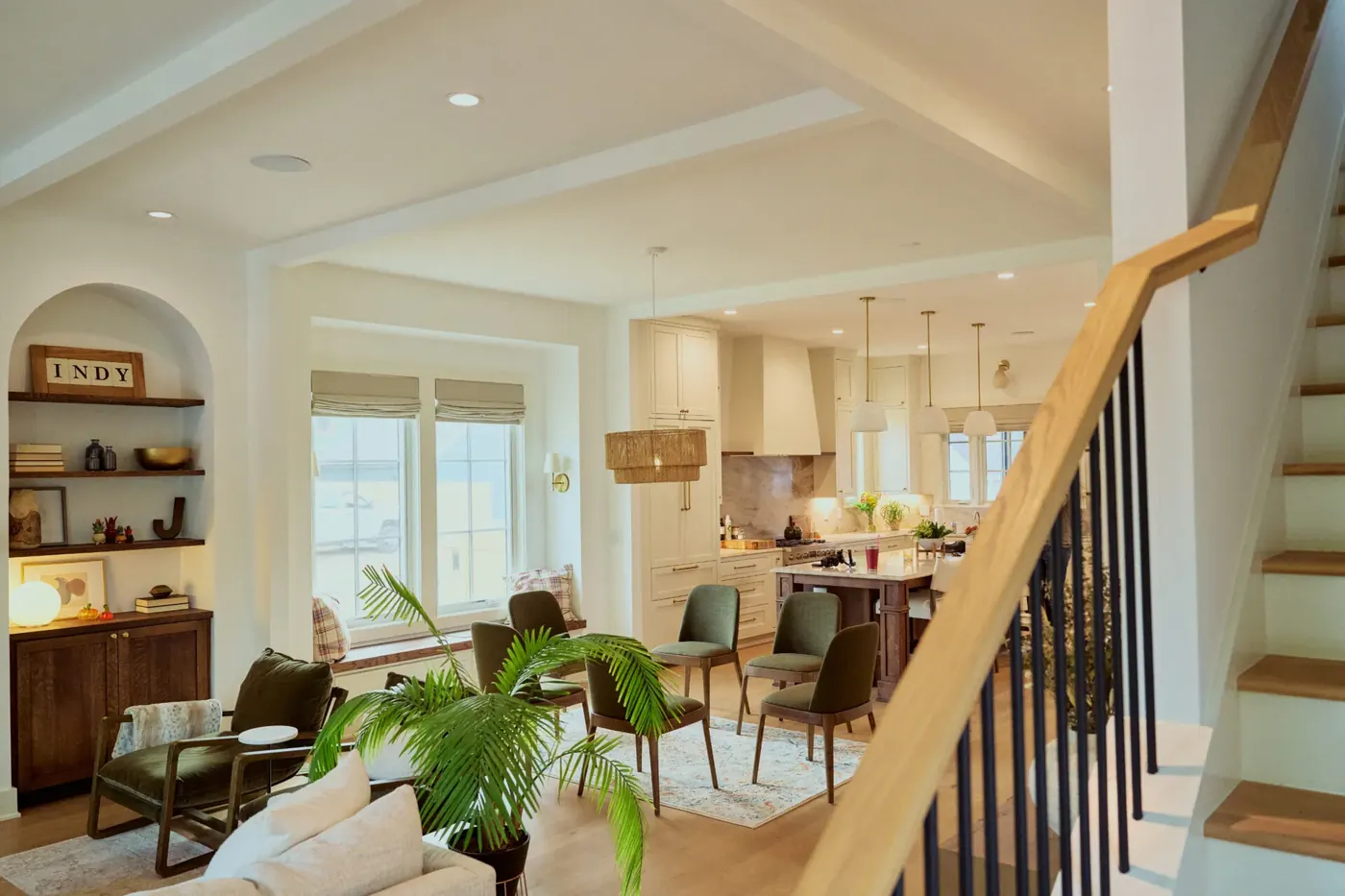
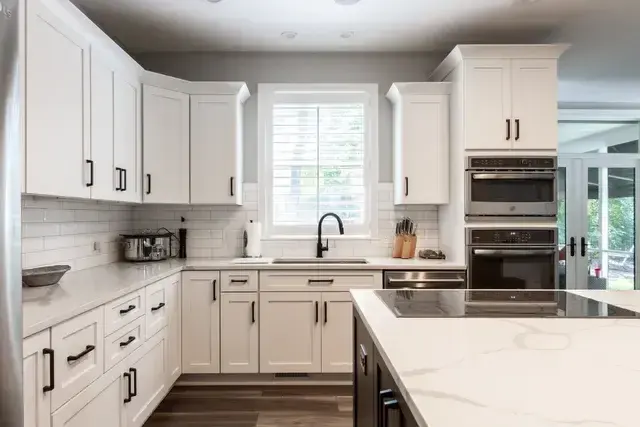
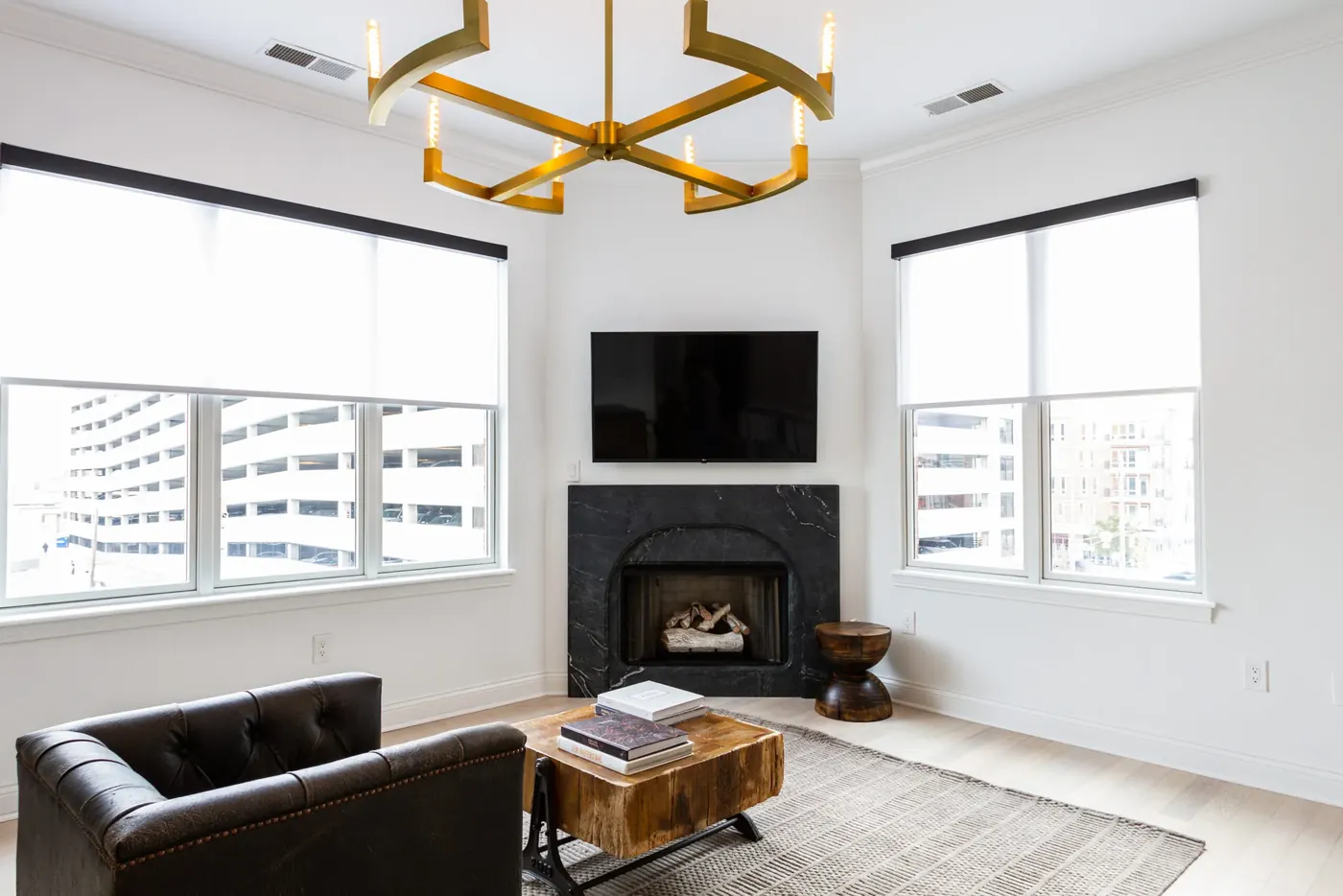
Custom shades measured and installed in DanvillePlantation shutters fitted to a Danville windowCellular shades in a Danville living room
Scope of Work

What Wood Blinds Includes

Every Danville job is documented item by item. Here is what the crew covers.

Room-by-room check that every opening stays conditioned all year before wood goes onto the order

Wet rooms ruled out in writing, because a bath or a window over a sink is a faux wood job

Three widths and three heights per opening, plus a diagonal check for square

Mounting depth measured so the headrail sits fully inside the opening where an inside mount is wanted

Basswood specified as the working standard, with heavier species used only where the grain has to carry a room

Slat size chosen against the opening height and the weight of the existing casing

Wider single spans priced without a support bracket, since wood weighs less per foot than composite does

Stain or paint matched from a physical sample held against your actual trim in your actual light

Grain variation and color drift across a stained order explained before anything gets signed

Cloth tape ladders selected where a woven band suits the room and hides the route holes

Routeless construction offered where a line of lit holes would bother you at night

Valance profile and return depth chosen to sit correctly against existing millwork

Wand tilt set as the default, with cord tilt only where a wand fouls a handle or a return

Cordless lift specified in bedrooms, stairwells and any room children use

Products specified to conform to ANSI/WCMA A100.1-2022 for cord access

Light gap per side disclosed at the measure and carried onto the paperwork

Written contract with scope, dates and total price, as IC 24-5-11 requires on residential work over $150

Slats leveled and both full tilt travel and full lift travel tested at every window on install day

Pricing

What Wood Blinds Cost in Danville

Published national figures for the category put stock blinds and shades near $60 to $600 a window, with custom-fabricated product running roughly $250 to $2,600. Those are national ranges and they aren't a quote for a house in Danville. Real wood sits above faux wood in that band and it should, because you're paying for a milled hardwood slat and a finish that has to look right next to your existing trim. Size drives the number first. After that it's the finish: a stock stain costs less than a color matched to millwork, and a matched finish sometimes means a sample run before production. Cloth tapes, a deco valance and routeless slats each add. Danville Window Treatments prices from measured openings in Hendricks County, never from an average.

By Product

How Wood Blinds Differ by Product

Every product in this trade behaves differently in a room. Here is what that means for this work.

2 inch basswood slat: Our working standard in real wood. Basswood is light for its stiffness, which is exactly what you want in a lift mechanism, and the 2 inch slat suits the openings and the casing we find in most central Indiana houses.

2 1/2 inch basswood slat: The same species with a wider face, so fewer slats cross the opening and the view out improves when they're tilted open. It suits taller windows and rooms with substantial casing, where a narrow slat starts to look busy against the trim.

Heavier hardwood species: Some lines offer denser woods that take a stain with more figure than basswood shows. They cost more and they weigh more, so we reserve them for a room where the blind is meant to be looked at rather than looked through.

Stained finish: A transparent finish that lets grain read through, which is the reason to buy wood at all. Expect variation from slat to slat, because that's the wood talking. We hold a physical sample against your trim before committing anything to an order.

Painted finish: An opaque finish in white or an off-white, which gives you wood's light weight and a face that reads as painted millwork. It's the right call when the blind should disappear into the trim instead of standing apart from it.

Custom color match: The factory matches a finish to a sample you supply, usually a piece of your casing or a stair part. It adds cost and time, sometimes a sample run before production, and it's the only honest way to hit an existing stain.

Cloth tape ladders: A woven tape running down the face of the blind that covers the route holes and adds a color band. On a stained wood blind it's a strong design move, and it narrows the view a little wherever a tape crosses the slats.

Routeless wood slats: The lift cord sits in a notch at the back edge instead of a punched hole, so a closed blind has no line of bright dots across it. In a bedroom with a streetlight outside, that's the difference people actually notice.

Crown or deco valance: A shaped valance with a deeper face than the standard flat one, meant to read as trim rather than as a cover for hardware. Choose it where the casing is heavy enough that a plain valance would look thin against it.

Cordless lift: A constant-force spring in the headrail with no lift cord on the blind at all. Wood's lower weight makes cordless feel better here than it does on composite, and it's what we put in bedrooms and anywhere along a stairwell.

Common Questions

Wood Blinds FAQ

Questions we hear most often from Danville homeowners considering wood blinds.

We bring physical stain samples to the house and hold them against the actual woodwork in the actual room light, because a 1914 finish photographs nothing like it looks. Houses like the Scearce House of 1910 and the John Shirley House of 1885 have finishes that have aged for a century, and no factory stain chip is a true match on paper. We usually land close rather than exact, and sometimes the honest answer is to go deliberately different rather than slightly wrong. A near miss reads worse than a clear contrast on trim that old.
Over a kitchen sink, in a full bath, and in a laundry room. Basswood is a natural material and central Indiana's muggy stretch from late May through September is long enough to move it. We put faux wood in those three rooms and real wood everywhere else, in the same stain family, and most clients never notice the switch. The other place to think twice is a bare west facing opening in Northwood Haven or Quail West, where there's no canopy at all yet and the slat takes full afternoon sun.
Because the Main Street district was built one house at a time over 76 years across six named architectural styles, so there is no standard window. Two openings in the same room routinely differ. On stock between 106 and 182 years old we measure width at head, middle and sill, then check height on both stiles, and we assume nothing repeats until the tape proves it does. Newer Danville stock behaves differently: a 2022 house in Kensington Venture usually does repeat, which is why the measure there takes half the time.
On the evidence we have, no. Indiana Landmarks states plainly that owners can modify National Register properties as they wish when they're spending private money, and that real restrictions come only from a local ordinance administered by a local preservation commission. No Danville commission with that authority was found in our research, though the town's own site couldn't be read to confirm it, so we'd tell you to verify directly before relying on it. Interior blinds in particular are inside the house and outside anyone's exterior review.
You can, and you should expect a visible difference. Wood accepts stain unevenly, so a run fabricated months apart can come back a shade off even with the same order code. On a Foursquare with 16 to 22 openings that difference shows most when two windows sit on the same wall. The fix is to order per room and finish the room, or to place the later pair on a different elevation where they're never seen together. We'll flag the risk in writing before the order rather than after.
The pre-1920 stock on Main Street has tall openings with high head heights, and a wider slat suits them: fewer slats across the height, a cleaner sightline, and less visual clutter on a window that's already vertical. The tradeoff is stack. A two and a half inch slat piles higher at the top when raised and eats more of the glass than a one inch slat does. On a bay window in one of the Queen Anne houses we'll usually take the narrower slat so the stack stays under the head trim.
Because wood answers moisture by moving, and a bathroom gives it plenty to answer. A slat that takes on humidity swells slightly across its width, then gives that moisture back when the room dries out, and after enough cycles it doesn't come back straight. You get cupping along the slat and a blind that stops closing evenly. Faux wood has no fiber left to swell, so it does that job instead. In a white blind, from across the room, you'd have a hard time telling which is which anyway.
It runs it through two opposite conditions. The muggy stretch here goes from late May into late September, so a wood slat spends about four months taking on humidity. Then the heat comes on, indoor air gets dry, and the same slat gives that moisture back over a heated winter. In a conditioned room that cycle is mild and the blind is fine for years. In a room that swings, a sunroom or an unconditioned porch, it's the cycle that eventually takes a slat out of flat.
For most of what we hang, yes. Basswood is stable, mills cleanly, and it's light for its stiffness, which matters more than people expect. Weight is what a lift mechanism fights, and a lighter slat means a wider blind can work as one unit and a cordless lift feels smoother in the hand. Denser species exist and they show more figure under a stain, but they cost more and they add weight. We use them where a room is really about the look of the wood.
Usually close, sometimes exactly, and never from a screen. We bring physical samples and hold them against your casing in the light that room actually gets, because a stain that looks right under a showroom lamp can read orange at four in the afternoon. If nothing in the standard range lands, a custom color match sends a sample of your trim to the factory. That adds cost and time. It's also the only method that gets you there, so we'd rather quote it honestly up front.
Because it's wood. Grain runs differently through each piece, stain sits into open grain more heavily than into tight grain, and a slat cut from one part of a board takes color a little differently from its neighbor. On a stained blind that variation is the product working as intended, not a fault. If you want a face with no variation at all, a painted wood blind or a composite slat is the honest way to get it, and we'll say so before you order.
Wood is fine there as long as the room stays conditioned, which a living room does. What you should know is that a stained wood slat sitting in direct afternoon sun will lighten over years, and it lightens on the sun side more than the shaded side, so a wide window can end up reading unevenly. NFRC puts UV at roughly 40 to 60 percent of fading damage. Tilting the slats up bounces the direct sun toward the ceiling and slows the change. It doesn't halt it.
Wider than the same blind in composite, which is one of the practical arguments for wood. Every manufacturer publishes a maximum width and a maximum square footage, and those limits are really weight limits. Basswood weighs less per running foot than a faux wood slat of the same size, so a span that would want a center support bracket or a two-on-one headrail in composite can often stay a single unit in wood. We check the actual numbers against your measured opening before ordering.
They're woven tapes that run vertically down the face of the blind, covering the route holes and carrying a color band. Mechanically almost nothing changes, since the ladder still holds the slats and the lift still runs the same way. What changes is the look, quite a lot, and the view, slightly, because each tape sits across the slats and blocks a narrow strip when they're open. Frayed tapes on an old blind are one of the common reasons people replace an otherwise working unit.
On a tall window the wider slat usually wins. Fewer slats cross the opening, the face reads calmer, and the view between open slats is better, which matters more the more window there is. The 2 1/2 inch slat also suits heavier casing, and older houses in Danville often have casing worth respecting. Where we go back to 2 inch is a short window, a transom or a room with delicate trim, since a wide slat there swamps the opening it's sitting in.
They slow it, and that's the accurate word. NFRC attributes roughly 40 to 60 percent of fading damage to UV, with the rest coming from visible light and heat, so no window covering ends the problem outright. A closed wood blind is an opaque layer, which does more than a sheer fabric, and tilting the slats upward on a sunny afternoon keeps direct sun off a hardwood floor while the room stays usable. That's a real reduction in exposure rather than an end to it.
You can order more, and you should expect a small difference. Stain lots vary, wood varies, and a blind built next year comes from different boards than the ones hanging now. Across a hallway nobody sees it. On two windows in the same wall it's obvious. The practical answer is to order a room complete rather than half of it, even where a window seems low priority. We write the exact finish name onto your paperwork so a later order at least starts from the right reference.
Dry first, always. Close the slats one direction, run a dry microfiber cloth or a vacuum brush across the face, then close them the other way and repeat. For a mark that won't dust off, use a barely damp cloth and dry it immediately. Don't soak a slat, don't use a spray cleaner across the whole blind, and never put a wood blind in water the way people sometimes do with vinyl. Cloth tapes want a soft brush rather than anything wet.
In a bedroom or along a stairwell, yes. There's no lift cord on the product at all, which is the direction the ANSI/WCMA A100.1-2022 work on cord access points, and inner-cord non-compliance is treated as a substantial product hazard under 16 CFR 1120.3. Beyond that, a cordless wood blind is simply nicer to use every day, and wood's lighter weight makes the mechanism feel smoother than it does on a heavy composite unit. On very wide blinds we still talk through whether motorization is the better answer.
Custom fabrication runs two to five weeks in this trade, and stained wood tends toward the longer end because finishing is a separate step at the factory. A custom color match adds more, sometimes a sample run before production even starts. None of that is a delay. It's a factory milling and finishing slats to sizes taken in your house. You'll get the window in writing with scope, dates and total price, which the Indiana Home Improvement Contract Act requires on residential work over $150.
Free In-Home Measure

Schedule Your Free In-Home Measure in Danville

Contact Information

Reach Us Directly

Our team prioritizes scheduled measures and service calls, and books in-home measures during business hours.

Office
1417 Commerce Avenue, Indianapolis, IN 46201
Hours
Mon-Fri 8a-6p
Service Area
Danville, IN and Surrounding Areas

Ready to Book Your Measure?

Call us to set up an in-home measure, or to ask about a treatment that has stopped working. We will talk it through on the phone first.

Service area

Serving Danville and the surrounding area

Call NowGet Quote