What's Really Different Between Blackout and Room Darkening Fabric
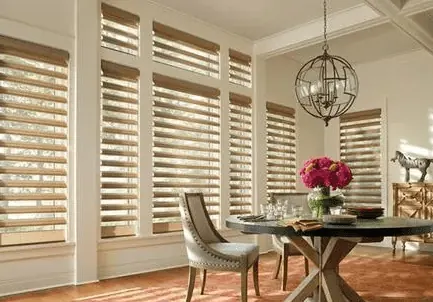
Not every room in a house needs the same amount of darkness, which is why the blackout-or-room-darkening question is really a room-by-room decision rather than a single choice for the whole project.
What Blackout and Room Darkening Actually Mean
A lot of homeowners assume any shade labeled blackout will turn a room pitch black, and that any shade labeled room darkening is basically the same thing with a softer name. Neither assumption holds up once the shade is actually installed. Blackout describes the fabric's ability to block light passing directly through the material, and it does that job well. Room darkening does the same job to a slightly lesser degree, blocking most but not all of the light through the fabric itself.
What neither label addresses is the light that sneaks around the shade rather than through it, which is often the bigger factor in how dark a room feels at night.
Understanding that distinction before ordering saves a lot of disappointment, especially for anyone in Danville expecting a blackout label alone to solve a bright bedroom.
How Much Light Gets Through, Realistically
This is the detail that trips up a lot of Danville homeowners chasing total darkness: even a genuine blackout shade, mounted inside the window frame, leaves a small gap along the edges so the shade can raise and lower without scraping the frame. That gap, often a quarter inch to half inch per side, is a light source the fabric spec doesn't cover.
For a bedroom where sleep quality is the whole point, an outside mount with extra width overlapping the frame, or a mount with side channels that block the gap entirely, closes that light path in a way inside mount alone doesn't. It's a small design decision that matters more here than in almost any other room.
Room darkening fabric on an inside mount, by comparison, has two light sources working against total darkness: the small amount that gets through the fabric itself, plus the edge gap. For someone who just wants the room dimmer, not pitch black, that combination is usually fine. For anyone chasing full darkness, it's worth the upgrade to blackout and a better mount together.
Price Difference Between Blackout and Room Darkening
As a general national range and not a quote for a specific window, room darkening cellular or roller shades commonly run $100 to $300 per window depending on size and fabric grade. Blackout versions of the same style typically run somewhere between $130 and $380, roughly 15 to 25 percent more, because of the extra lamination layer in the material.
That price gap holds across most shade styles, roller and cellular included, since the added cost comes from the fabric construction rather than the shade mechanism itself.
For most Danville homes, the smarter approach is choosing blackout only where it's actually needed, a primary bedroom or a media room, and room darkening everywhere else, rather than defaulting to the pricier option throughout the house. A free in-home measure will price out both options room by room so the decision isn't made on guesswork.
Working out where blackout is worth the extra cost and where room darkening does the job just as well is easiest room by room, with real measurements in hand. A free in-home measure is a low-pressure way to get there. Call (317) 999-5154 to set one up.
How the Fabric and Construction Differ
Blackout fabric for a Danville home is typically built in layers: a decorative face fabric on the outside, bonded to a foam or acrylic core that does most of the light-blocking work, with a backing layer completing the stack. Some products add a further layer for extra opacity, particularly in fabrics where the face material alone is fairly light in color.
Room darkening fabric usually drops one of those layers, most often relying on a napped or foam-backed liner behind a single face fabric rather than a full multi-layer lamination. That's a real difference in how the material is made, not just marketing language, and it's the reason the two products perform differently under a bright light.
The extra layers in blackout construction add weight and stiffness, which changes how the fabric folds or rolls. Blackout shades tend to roll into a slightly larger diameter at the headrail than a room darkening shade of the same width, something worth checking against your available valance or cassette space before ordering.
Which Rooms Call for Which Option
Where you spend the extra money for blackout matters more than whether you spend it at all in a Danville home. A primary bedroom, especially a west-facing one or a shift worker's room, is usually worth the upgrade. A guest room that gets used a handful of nights a year is a much easier place to stick with room darkening and save the difference.
Kids' rooms are a personal call rather than a clear budget answer, since some parents want the total darkness for nap time and some prefer the softer glow of room darkening on purpose. Either way, it's worth deciding room by room instead of applying one fabric grade to the whole house by default.
Media rooms and home theaters are the other space where blackout is usually worth the price, simply because the room doesn't function the way it's meant to without it.
Frequently Asked Questions
How much more does blackout cost than room darkening?
As a general national range, room darkening shades commonly run $100 to $300 per window, while blackout versions of the same style typically run $130 to $380, roughly 15 to 25 percent more because of the added fabric lamination.
Which rooms don't need blackout?
Kitchens and dining rooms rarely need it, and neither do most home offices, since blocking that much light during the day can make the space feel closed off. Room darkening or a lighter light-filtering fabric usually fits those rooms better.
Can I get blackout in a roman shade, not just a roller or cellular shade?
Yes, blackout linings are available across most shade styles, including roman shades. The lining sits behind the face fabric, so the outside of the shade still shows whatever pattern or texture you picked.
 How to Choose Drapery Fabric and Color in Danville
 Outfitting a Danville Apartment Building With Window Coverings
 Where Roller Shades Belong in a Danville House, Room by Room