Designing Custom Drapery for Danville Rooms, One at a Time
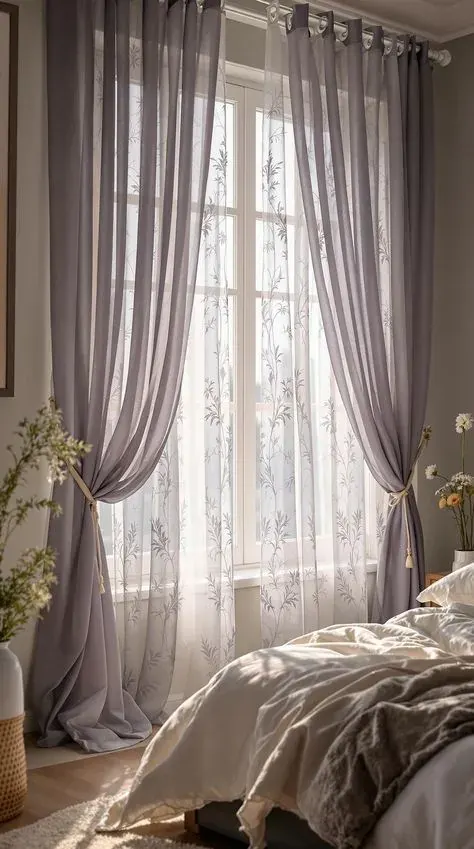
Most houses we walk into already have shades on the windows, so the drapery question is really a layering question: how much fullness the room needs, and whether the panels should draw at all or just sit there and look good. Get that backward in a Danville home and you end up buying more fabric and more hardware than the room actually needed. Here is how to get it right.
Pleat Styles and Fullness
Pleat style gets decided before a single yard is cut. Pinch pleat, sometimes called French pleat, is the classic. A buckram stiffener sits in the header, and the pleats get tacked by hand. The panel hangs on rings or a traverse track, tailored enough to hold its shape for decades. Two finger pleat uses less fabric per pleat and falls softer, good for a relaxed Danville family room. Goblet pleat is rounded and usually stuffed, better on a stationary panel since daily drawing flattens the shape. Ripplefold skips pleats entirely, riding evenly spaced carriers on its own track for a tight stack that motorizes easily.
Fullness is the ratio of flat fabric to the width the panel covers. At two times fullness, a panel covering 50 inches of rod uses about 100 inches of fabric before hems and returns. Most pleated drapery runs 2 to 2.5 times, and sheers want more. Drop below 2 times and the pleats pinch and the panel looks cheap. Ripplefold is measured as a percentage instead, and 80 or 100 percent is common.
Choosing Drapery Room by Room
A shade blocks light at the glass. Drapery softens the sound in a room and gives a window a reason to look like part of the wall instead of a hole punched through it.
- Living rooms get the most value from drapery, mounted high and wide, often stationary, with a shade underneath doing the light control.
- Dining rooms can go formal, since the room gets used at night more than during the day and pinch or goblet pleats with interlining fit that mood.
- Primary bedrooms need drapery working, not decorating: a blackout lined panel closed over a room darkening shade, with real overlap and full returns, is what actually blocks the light.
- Home offices benefit from stationary panels beside a solar shade, taking the edge off both glare and the echo that comes with hard floors and video calls.
- Kitchens and bathrooms mostly skip full length panels in favor of something shorter and wipeable.
Across Danville and IN communities, the drapery that looks effortless almost always started the same way: the rod went up higher and wider than felt necessary, and the fabric got chosen only after.
Hang the rod high and run it wide, then let a shade do the actual light control while the fabric handles the softening. That approach alone fixes most drapery problems in Danville houses. Danville Window Treatments will tell you when stationary panels are the smarter buy instead of selling you functioning drapery you do not need. Call (317) 999-5154 to walk your rooms, anywhere in Hendricks County, IN.
What Custom Drapery Costs
Fabric gets blamed for most of a drapery quote, but yardage deserves the credit. Take the width the panels cover, multiply by fullness, add returns and hems, divide by usable fabric width, and multiply by the finished length, and that is your real yardage. A pattern repeat piles on top, and a big repeat on a tall window can eat through fabric fast.
Nationally, custom drapery measured and installed runs roughly $250 to $2,600 a window, usually landing toward the top of that range since drapery takes more fabric and labor than most shades. Hardware, whether a simple rod or a motorized track, tends to get quoted separately, so ask directly whether a Danville quote you are holding includes it. Fabric dye lots shift slightly, so a panel added next year might not match the ones already up. Cleaning stays limited to dry cleaning or an in place service. When comparing bids, ask for fullness, lining, whether hardware is included, and lead time.
Hardware, Stack Back and Floor Break
Stack back, the wall space a fully open panel occupies, grows with fullness, fabric weight, lining and pleat style, and it is why so many drapery panels end up shading part of the glass around the clock. Running the rod wider than the window and higher than the trim solves most of it. A one way draw, stacking entirely to whichever side has room, handles a wall that cannot fit panels on both sides.
A return wraps the panel back to the wall at the rod's end, closing off the light line that shows up without it. An overlap lets two panels meet and cross in the middle so there is no gap when closed. Brackets need to land in framing or in rated anchors, and a long rod needs a center support. Float sits about half an inch above the floor, the practical choice for daily use or a home with pets. Kiss just touches down, striking on a level floor and unforgiving on one that is not. Break adds an inch or two that folds softly at the bottom. Puddle piles three inches or more and belongs only on a stationary panel. Measuring the floor matters in Danville, where older houses rarely run level across a whole window.
Lining Choices and Fabric Behavior
Four lining options cover most custom orders. Unlined panels are soft and let light pass freely, but the face fabric fades fastest with nothing behind it for protection. Standard lining: a sateen backing that adds body, keeps the exterior view uniform across a row of Danville windows, and reduces and slows fading of the face fabric without stopping it.
Blackout lining: a coated backing that blocks light through the cloth, though light still enters around the panel without a generous overlap and full returns, and needle holes at the tacks can show as small points of light. Interlining: a flannel layer between face and lining, the most expensive option, adding weight, improving fold depth, muffling sound slightly, and hiding the shadow of the rings. Fabric weight determines how a panel falls. Heavy fabric hangs straight and holds a pleat well. Linen responds to humidity and is usually floated rather than kissed for that reason. Velvet needs strong hardware given its weight. Sheers require the most fullness of any fabric type to avoid a thin, flat appearance.
Frequently Asked Questions
What fullness should custom drapery be made at?
Two to two and a half times the width the panel covers is standard for pleated drapery. Sheers usually want two and a half times or more, since thin fabric at low fullness looks flat and skimpy. Below two times, the waves flatten out and the pleats pinch, so the panel reads cheap even in expensive cloth. Ripplefold is specified as a percentage instead, with eighty or one hundred percent common.
What is stack back and why does it matter?
Stack back is the amount of wall the panels occupy once they're fully open. It grows with fullness, fabric thickness, lining and pleat style, and it's the reason so many drapery panels end up covering part of the glass all day long. The fix is to run the rod wider than the opening, so the open panels land on wall instead of window. Where there isn't enough wall on both sides, a one way draw stacking to the open side solves it.
Which floor break should I choose?
Float the hem about half an inch off the floor for anything you draw daily or for a house with pets, since a dragging hem wears out at the corners. A kiss length just brushing the floor looks beautiful but demands a level floor. A break of an inch or two is forgiving on uneven floors. A puddle of three inches or more suits stationary panels only and collects dust. Measure the floor in several places, since floors are rarely level all the way across.
 Outfitting a Danville Apartment Building With Window Coverings
 Where Roller Shades Belong in a Danville House, Room by Room