Living With Motorized Shades in a Danville Home
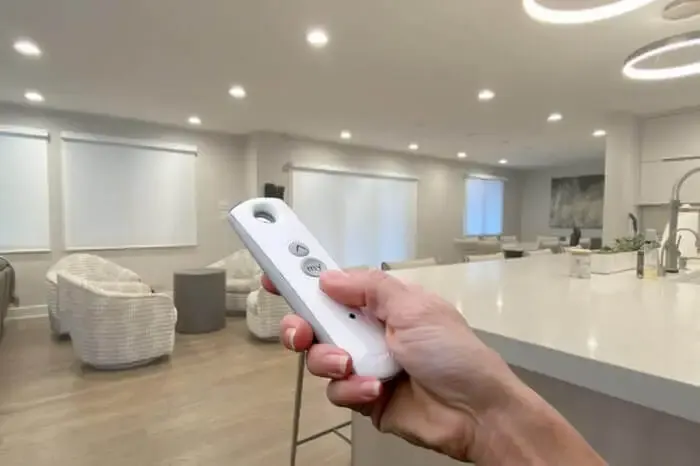
Everything about a motorized shade looks great on install day. The more interesting question is what it is like eleven months later, when a battery is fading and the summer schedule no longer fits the winter sun. This is the ownership side of it, written for a Danville homeowner who wants to know what the routine looks like before signing, rather than finding out during the first cold snap.
How the Motor Gets Its Power
This is the first decision to make, and it is easiest to make before a single shade gets ordered. A motor needs power from a battery, a hardwired line, or a nearby outlet through a plug-in supply, and each option changes the price and the install, plus what you will be doing a year from now.
If the house is finished and staying that way, battery is usually the practical default, since nothing runs through a wall and no electrician needs to be scheduled. Nationally it also runs roughly $100 to $300 a window less than hardwired, which matters more the more windows are on the list. The commitment is smaller upfront and larger over time, since someone manages charging for as long as the shades are in use.
If any part of the Danville house is being opened up for a remodel, price hardwiring before that wall closes. Running low voltage wire while studs are exposed costs a fraction of fishing it in later. Settle this room by room rather than assuming the whole house should go one way.
Remotes, Hubs and Schedules
Once there is a hub in the house, the shades stop being something you operate and start being something that runs on a routine. Some hubs also connect to voice platforms such as Amazon Alexa or Google Home, though whether a specific one works depends on the hub and its firmware rather than being guaranteed. Astronomical timing does the most day to day work: the schedule follows actual sunrise and sunset for the date, so a six o'clock rule that feels right in October is an hour off by June.
Scenes are the other piece worth setting up. A scene moves a group of shades to set positions with one tap, and most households build a handful tied to real moments in the day. A morning scene opens the kitchen and living areas partway. An afternoon scene drops the west facing shades before the sun gets low, which is the one that keeps a Danville room from overheating in summer. An evening scene closes the front of the house.
Sun sensors take this further, extending or lowering a shade when light crosses a threshold. Some households like the shade adjusting itself. Others find it irritating enough to switch the sensor off within a month. Starting with schedules and adding a sensor later tends to work out better than the reverse.
Which Windows Are Worth Motorizing
Some of the buyer's remorse around motorization traces back to motorizing the wrong openings in the first place, not to the technology failing. Openings worth the cost tend to share a trait: hand operation on them was genuinely bad, not just slightly inconvenient.
- Anything above roughly eight feet, where the alternative was a pole or a ladder.
- Shades behind a sink, a tub or a bed, wherever reaching them meant climbing on something.
- A room with several shades that should move as one group.
- Large or heavy glass, where a cordless lift discouraged daily use.
A motor on a small bathroom window does not fail more often than one on a stairwell shade. It just gets used so rarely that any issue feels disproportionate. That is a placement problem, avoided in a Danville home by being honest about which windows get touched enough to justify $300 to $1,500 a window installed nationally.
Battery Life and the Charging Routine
Battery life is a cost most people forget to price until they are living with it. Hunter Douglas publishes roughly a year for its PowerView motors, a reasonable planning figure, though a shade running twice a day on a schedule gets there faster than one you only touch on weekends.
The hidden cost shows up in time rather than dollars. Rechargeable wands take hours on a wall outlet, so a shade sits out of service while it charges. On a dozen battery shades with roughly annual batteries, that works out to something coming down for a charge close to once a month somewhere in the house. A solar trickle charger can stretch that interval on a sunny exposure, though it barely helps a shade on a north wall.
Alkaline packs swap in a minute but cost money every time, against a rechargeable wand that costs only attention. The honest way to budget is to assume a small recurring task exists no matter which format gets chosen, and plan the charging schedule instead of waiting for a shade to stop working.
Warranty, Service and What Ownership Is Really Like
Two warranties ride along with a motorized shade, rarely the same length. One covers the fabric and mechanism. The other covers the motor and electronics, usually shorter than the first. Ask for both in writing, and ask who comes out when a motor fails in year three, and whether labor is covered or only the part.
That is where buying from a company that measures and installs matters. A motor eventually stops running, and when the installer holds the account with the manufacturer, a claim goes through them and someone shows up. Buy the same shade online and the relationship is yours to manage, along with the shipping and the reinstall.
Day to day quirks are mostly minor: a brief motor hum while traveling, noticeable in a quiet bedroom at six in the morning. Two shades on one group can drift out of alignment after a year, which is a limit reset, not a defect. A Danville summer schedule is not a January one, so treat the system as a seasonal habit, swapping scenes and checking batteries when the clocks change.
Settle the power method and the control type before the order goes in, not after. Price hardwiring while a wall is open, and decide which windows are actually annoying enough to motorize before the fabric gets chosen. Danville Window Treatments puts all of it in writing for Danville homes, insured and bonded. Call (317) 999-5154 before you sign anything.
Frequently Asked Questions
How long do the batteries really last?
Hunter Douglas publishes roughly a year for its PowerView motors, and that is a fair planning number across the category. Actual results move with use. A shade running twice daily on a schedule drains faster than one you only touch on weekends, and a wide blackout roller works its motor harder than a small cellular shade does. Cold rooms cut battery capacity further on top of that. Rechargeable wands take hours to charge, not minutes, so plan around a dozen battery shades needing attention roughly once a month somewhere in the house.
Do I need a hub, or is a remote enough?
A remote is enough if pressing a button is all you want. It pairs directly to the shade over radio and needs no network at all, so it keeps working during an internet outage. A hub adds schedules and phone control, plus integration with other smart home devices, though it depends on your network and on an app someone else maintains. Start with whether you actually want the shades moving on a schedule. If not, skip the hub.
Can I add a motor to shades I already have?
Sometimes. Certain product lines are built so a motor can be retrofitted into the existing headrail or roller tube, and plenty of others are not. Even when it is possible, the labor plus the motor often comes close to the cost of a new motorized shade, so it is worth pricing both before deciding. If motorization is even a maybe, price it at the time of the original order. That is a lot cheaper than revisiting the question a year later.
 How to Choose Drapery Fabric and Color in Danville
 Outfitting a Danville Apartment Building With Window Coverings
 Where Roller Shades Belong in a Danville House, Room by Room